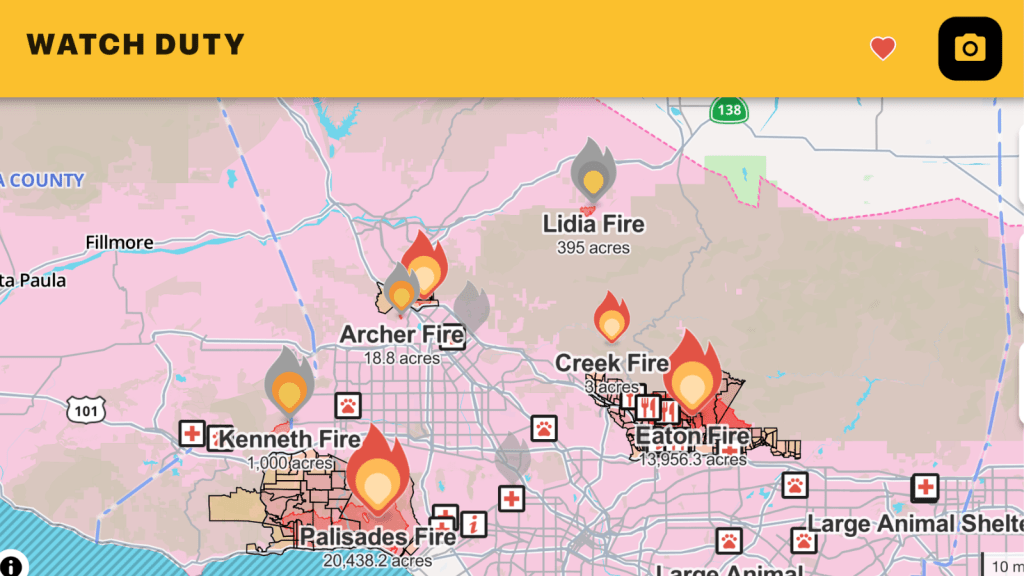
Screenshot from the Watch Duty app.
Fires are burning on nearly 35,000 acres around Los Angeles. The smoke can be seen for miles, introducing a dangerous mix of “gaseous pollutants (e.g., carbon monoxide), hazardous air pollutants (HAPs) (e.g., polycyclic aromatic hydrocarbons [PAHs]), water vapor, and particle pollution.”(EPA, 2024) Rising global temperatures, highly flammable invasive species, water shortages, and the warm Santa Ana winds have created dangerous fire conditions.
If you or anyone you know is being impacted by the Los Angeles fires, check out the MALAN Fire & Wind Storm Resources.
The impacts of climate change are visible with more extreme climate events. As individuals, there is nothing that can be done at this point but prepare for evacuation. With wildfires, it is important to remember that people should always be chosen over property. Fires move quickly and embers can spread in the wind, there may not be a lot of time to pack belongings and leave. Making a go bag and planning is essential to maximizing evacuation time.
It is important to check on your neighbors including those who are unhoused. Folks with inconsistent access to WIFI or power might not be getting the same emergency alerts as others and it is important that we work as a community to ensure everyone’s safety.
If you have a house, the first step is turning off the gas. After that, you should collect the people and animals who live with you and look at the current evacuation orders. Those orders can be found on Watch Duty or in your county’s emergency alert system. Before you leave, the three key things to remember are water, medical supplies, and a go bag.
You should have one gallon of water per person per day. Remember to bring water bottles and if you have access to a fast filtration system or iodine water filtration tablets include those in your packing list. Medical supplies are important to fire response. Your first aid kit should include bandages, antibiotic ointment, rubbing alcohol swabs, duct tape, superglue, over the counter painkillers, and over the counter allergy medication. Make sure you have N95 masks to protect your lungs from the smoke.
A go bag should be similar to what you might pack in an airplane carry-on. Items that cannot be replaced should be prioritized with important documents, photo ID’s, and prescription medication. Important documents might include your passport, birth certificate, social security card, green card, property deed, and a copy of your insurance policies. If you are taking prescription medication it could be helpful to have a copy of your prescription just in case it needs to be refilled without your current doctor.
The next step is collecting electronics, charging cords, and a portable power bank (bonus points if it is solar-powered). Hygiene items like toothbrushes, toothpaste, moisturizer, soap, and hair care should be packed in a plastic or silicon bag to reduce the risk of them leaking. You should include a change of clothes focusing on warm layers and a good coat, socks, and a hat. If you have space, you can collect heirlooms, photo albums, or other sentimental items. A secondary go bag can also be useful with a sleeping bag, tent, and camping stove. These should be packed and stored for easy access so they can be moved into a vehicle quickly.
As the fire path is analyzed, community resources will start setting up evacuation centers. Those not impacted directly can volunteer or drop off resources like N95 masks, water, and non-perishable food. It is important to keep phone and social media channels clear for emergency services. There are also small and large animal evacuation points. If a wild animal has been impacted by smoke, you can reach out to animal services and they will likely have a resource.
Thank you to all of the essential workers who have been called in to contain the fires. It is important to recognize the intersection of firefighting and incarceration in California. Individuals helping out who are experiencing incarceration work for less than minimum wage in dangerous conditions. When they leave the prison system, many fire departments are unwilling to hire a candidate with a criminal record. We at Earth on Fire believe a universal minimum living wage must include people experiencing incarceration and jobs should be available to all qualified candidates.
Be safe, stay calm, and have a plan. Your life and the lives of the people around you are worth more than any material possessions. If you can donate or volunteer to support folks at evacuation centers, prioritize showing up for your community. Fires can have devastating effects on the unhoused and low income communities and mutual aid is often necessary for survival.
Last Updated 1/10/2025 by DM
Sources:
“Why Wildfire Smoke Is a Health Concern.” EPA, Environmental Protection Agency, 4 Oct. 2024, http://www.epa.gov/wildfire-smoke-course/why-wildfire-smoke-health-concern.
Diaz, Jaclyn. “Inmates Are Fighting California Wildfires in Long-Running and Controversial Practice.” NPR, NPR, 10 Jan. 2025, http://www.npr.org/2025/01/10/nx-s1-5254122/inmate-firefighters-california-wildfires.
 Earth on Fire
Leave a comment